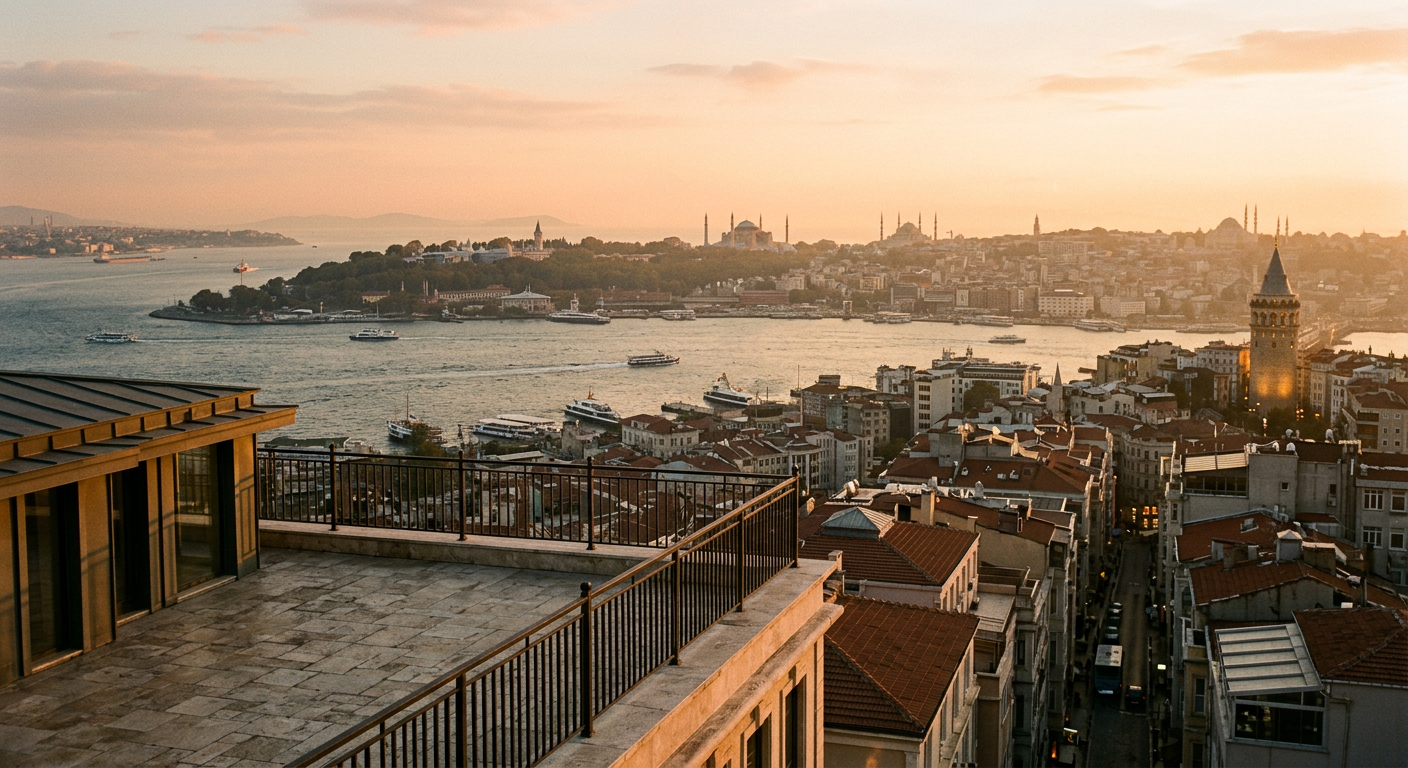
Istanbul Etiquette: What Western Visitors Get Wrong
Istanbul is the only major city in the world that genuinely sits on two continents, and it behaves accordingly. A visitor who reads it as European will offend the Anatolian half. A visitor who reads it as Middle Eastern will offend the European half. The skill is in reading the room — and in Istanbul the room changes every six streets.
Most Western visitors arrive with a single mental template for the city and leave having quietly given offence three or four times without realising it. The offences are never confronted; Istanbul is too polite. They simply alter how the rest of the trip unfolds.
A City That Sits on Two Continents — and Two Codes
The European side, broadly, runs from Sultanahmet through Beyoğlu and Beşiktaş into Bebek. The Asian side begins at Üsküdar and runs through Kadıköy. The cultural divide is not as neat as the geographic one, but as a rule of thumb: the European side is more cosmopolitan in dress and tempo; the Asian side is more residential, more domestic, more attentive to family-scale etiquette.
A dinner in Bebek can feel like Cannes. A dinner in Üsküdar will feel like a careful Anatolian household. Both are Istanbul. Neither is wrong about what Istanbul is.
Dining: When to Arrive, How to Decline, What to Tip
Istanbul restaurants take their timing more seriously than most Mediterranean cities. A nine o’clock booking is a nine o’clock booking. Arriving at nine-fifteen is not Parisian charm — it is read as disrespect to the kitchen.
Declining a dish is its own small art. The Turkish way is to allow the host or the waiter to suggest, to nod with appreciation, and to say “another time, perhaps” to anything that does not fit. Direct refusal is read as dismissive of the offer rather than the food. If a host or restaurateur sends a dish from the kitchen — and at the better restaurants they will — accept at least a taste. Sending it back untouched is the closest a Western visitor will come to a real offence.
Tipping in Istanbul is gentle. Ten per cent in cash for good service is correct; fifteen for exceptional. Adding it to the card is acceptable in Beyoğlu and Bebek; less so in older neighbourhoods, where cash hands the tip directly to the staff.
Dress: Bosphorus, Beyoğlu, the Mosques
Three different cities require three different reads.
Bosphorus restaurants and Bebek bars: dress for a Mediterranean European evening. Tailored trousers, a jacket without a tie, an unstructured dress. The waterfront is more formal than first-time visitors expect.
Beyoğlu and Karaköy by day: neighbourhood-scale, creative, more relaxed. Jeans are fine. The restaurants and galleries here read closer to Berlin or Lisbon than to a grand European capital.
Mosques and the historic peninsula: this is where Western visitors most often misread the room. Even outside the mosque grounds themselves, the Sultanahmet area is a more conservative environment. Shoulders covered, knees covered, scarves available for women entering the mosques. The Hagia Sophia is now an active mosque and the dress code is enforced.
The general rule for the discerning visitor is to dress slightly more formally than the neighbourhood requires. Istanbul reads dress as respect, and respect opens tables.
Hospitality: The Refusal That Means “Ask Again”
The single most useful piece of cultural knowledge for Istanbul is the structure of Turkish hospitality. When something is offered — tea, dessert, a ride home, a tour of a private collection — the first refusal is often part of the script. A polite “no thank you, you’re very kind” is sometimes a request for the offer to be made a second time, more firmly.
Western visitors take the first no at face value and walk away. The Turkish host registers this as the visitor not really wanting the thing offered. Both sides leave with a slight, unspoken misunderstanding.
The simplest rule: offer twice, accept on the second invitation. If the visitor is the one offering, do not take the first decline as final.
For travellers building a longer regional itinerary, a curated companion directory covers Istanbul and the wider Turkey region, with profiles that are accustomed to the city’s bicultural rhythm.
Conversation: Topics to Open, Topics to Avoid
Safe ground in Istanbul is broad and rewarding: food, the city’s architecture, family travel, football (Galatasaray, Fenerbahçe and Beşiktaş, with Galatasaray and Fenerbahçe being the more diplomatic conversation starters depending on the table), and the Bosphorus itself, which Istanbulites discuss the way Londoners discuss the weather.
Avoid: the Armenian question, the Kurdish question, the AKP, Atatürk’s legacy in a way that takes a strong position, and any commentary on dress codes or religious observance. These are not topics on which a foreigner adds value; they are topics on which a foreigner is most easily misread.
A small detail: when discussing Istanbul, never call it Constantinople, even in a historical context, unless the Istanbulite at the table opens the door first. The city has been Istanbul officially since 1930. Visitors who use the older name are read as not having done the small homework.
Hotels Where Staff Read You Correctly
Four hotels in Istanbul have staff who understand cosmopolitan Western codes without abandoning Turkish ones — which is the right combination.
Çırağan Palace Kempinski on the Bosphorus is the grand option, a former Ottoman palace with the staffing depth of a state hotel. The Sultan Suite is genuinely separate from the main building.
Four Seasons at the Bosphorus is the discreet option. The hotel has two faces — historic on the inside, modern on the outside — and the staff are unusually multilingual.
Soho House Istanbul is the bohemian option in Beyoğlu, for visitors whose week is more creative than corporate.
The Peninsula Istanbul is the newest, opened in 2023, and currently the most considered concierge in the city.
The travel desks at Monocle and the Turkish Ministry of Culture and Tourism both produce serviceable second opinions on the city’s better neighbourhoods, though the Monocle take ages better.
Editorial Team, Asia-Escort
-
Internal links used:
https://asia-escort.net/,https://asia-escort.net/country/turkey/ -
External links used: Monocle, Turkish Ministry of Culture and Tourism
