Bangkok After Hours: Where Business Travellers Actually Stay
Bangkok of a 9am Zoom call and the Bangkok of an 11pm dinner are not, in any meaningful sense, the same city. The first is glass and air-conditioning. The second is heat, river, scooter traffic and the strange clarity that arrives at a rooftop bar twenty floors above Sukhumvit. A business trip that ignores the second city misses half of what makes Bangkok useful as a posting. A business trip that surrenders to it without a plan misses the morning meeting.
This guide is for the visitor who wants both — the meeting at the top of the day and the calm, private evening at the end of it.
Bangkok Is Two Cities After 8pm
By eight in the evening, the city splits. The Sukhumvit grid keeps moving — restaurants, bars, hotels with lobbies that are still active at midnight. The Sathorn corridor slows down, becomes residential, becomes Geneva-with-mango-trees. The Riverside opens up: the breeze from the Chao Phraya, the long-tail boats with their lights, the hotels that have arranged their entire architecture around a view of the water.
A business traveller picks a neighbourhood the way one picks a tempo. Sukhumvit for energy. Sathorn for calm. Riverside for distance from everything.
Sukhumvit vs Sathorn vs Riverside
Sukhumvit is the working spine of expat Bangkok. The BTS Skytrain runs above the road. The good hotels — Park Hyatt, Sindhorn Kempinski, the new Capella in the same district — are arranged along it. After hours, the neighbourhood does not sleep. Restaurants in Thonglor and Ekkamai stay open late, the bars at Penthouse and Tichuca pull a serious crowd, and the cab rides between them are short. If your week involves multiple meetings across different offices, Sukhumvit is the answer.
Sathorn is where the embassies are, and the tone follows. The streets are wider. The traffic is calmer. The hotels — The Sukhothai, the COMO Metropolitan, the Banyan Tree — are older, more residential, more concerned with gardens than rooftops. Sathorn is the answer for a visitor whose week is built around two or three important dinners, not eight networking drinks.
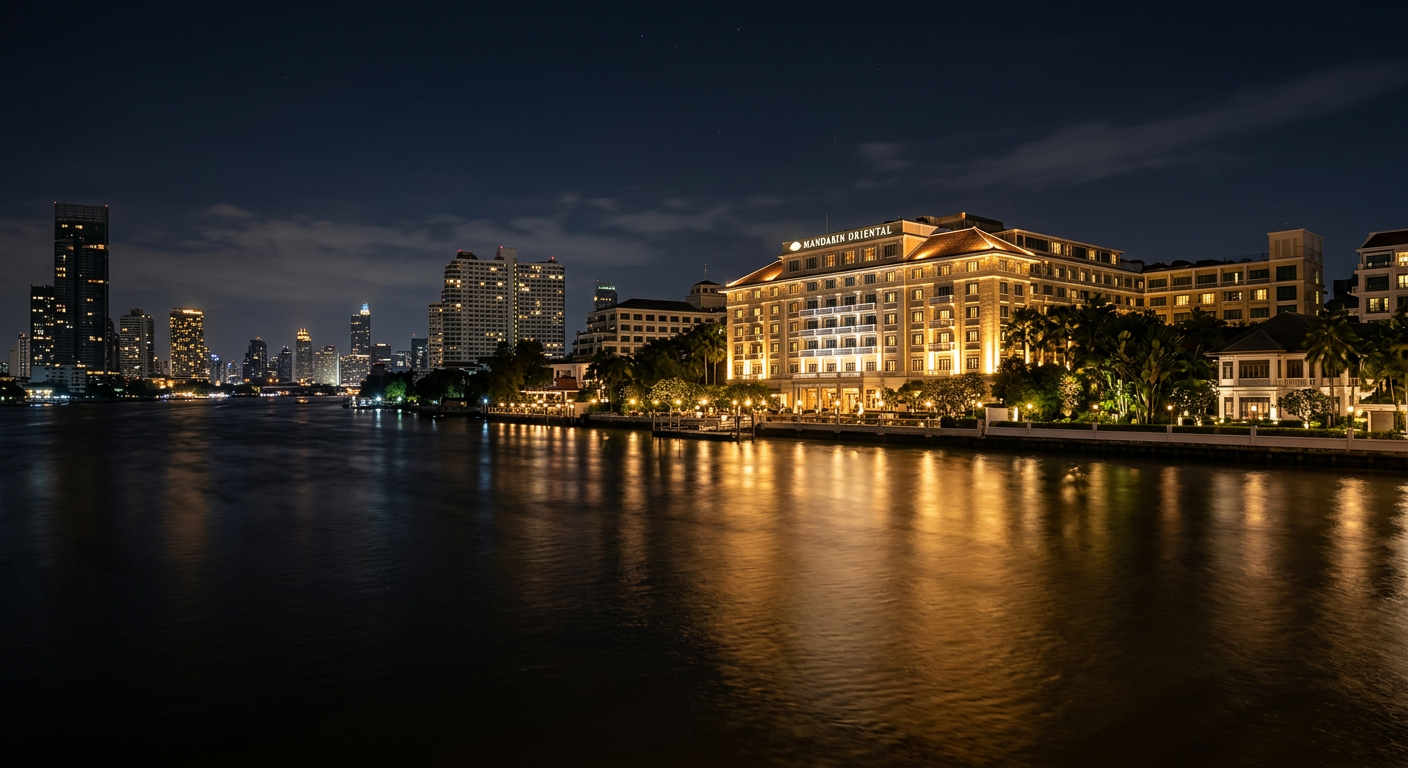
Riverside is the dramatic choice. Mandarin Oriental, Four Seasons, Capella all sit on the same stretch of river. The advantage is the view, the boat shuttles, and the genuine sense of having arrived somewhere other than Bangkok. The disadvantage is the time it takes to cross back into the city centre for meetings. A traveller who is staying four nights and has cleared two of them for private time uses Riverside well. A traveller running between offices does not.
The Hotel Shortlist
Mandarin Oriental Bangkok is the oldest grand hotel in Asia and still the most considered. The Authors’ Wing carries a century of decorum. River suites face Wat Arun. The staff have an almost European sense of when to disappear. A visitor who values being remembered as “Sir” rather than “Mr Henderson” stays here.
Capella Bangkok is the contemporary answer to Mandarin Oriental. Lower-rise, riverside, with a residential layout that means the corridors feel like a private apartment building rather than a hotel. Direct suite access from a back lift is part of the design.
Four Seasons at Chao Phraya is the newest of the three. Glass, modern, with a more visible lobby — which is either a feature or a flaw depending on how one travels. Suite categories above Deluxe have private terraces with river frontage.
Park Hyatt Bangkok sits in a vertical tower at Central Embassy in Sukhumvit. The room categories matter here more than at the riverside hotels — the difference between a standard and a corner suite is significant in terms of how the lift bank is shared. Travellers who use Park Hyatt regionally know the brand’s signature: lobbies that look like libraries.
Suite Categories That Matter for Privacy
Three things to ask the reservations desk, not the booking site.
-
Does the suite category have a separate lift, or does it share with general floors. Capella and Mandarin Oriental’s Authors’ Suites have separate access. Most Sukhumvit towers do not, until you reach the Presidential level.
-
Does the room category have a private terrace or a Juliet balcony. A real terrace means a private breakfast outdoors. A Juliet balcony means a view through glass.
-
Is the in-suite check-in offered. At the riverside hotels, this is available on request even at suite level — a small concierge meets the car, takes the bags, and the lobby is skipped entirely.
For visitors building a longer Thailand itinerary, the companion catalogue covering Bangkok and the wider Thailand region is curated with the same discretion that the city’s better hotels practise.
The Lobby Policy Question
Bangkok hotels vary widely in how they treat lobby movement. The unwritten convention at the riverside grand hotels is that guests’ company is the guests’ business. Staff acknowledge, do not register, do not photograph. At the newer business towers along Sukhumvit, particularly those popular with regional tourism, the desk staff are more visibly attentive — which is a polite way of saying that arrivals are noticed.
Travellers who care about this should ask the concierge a single question on arrival: “Is there a back-of-house entrance from the parking level”. The answer reveals more than any review.
Practical Notes on Arrivals and Departures
A few patterns that work:
-
Arrive at the hotel before nine in the evening or after eleven, not during the 9–11 lobby peak.
-
Use the hotel’s own car service from the airport — the same driver remembers the right gate, avoids the BTS construction routes, and the car plate is logged by the doorman as a hotel vehicle.
-
Tip on departure, not arrival. Tipping the doorman on arrival is read as anxiety.
Editorial Team, Asia-Escort
-
Internal links used:
https://asia-escort.net/country/bangkok/,https://asia-escort.net/country/thailand/
