Dinner Date or Hotel Date: What Actually Changes
The two most commonly booked formats in this industry are the dinner date and the hotel date. The two formats are sometimes spoken of as if they are simply different lengths of the same thing. They are not. They are different briefs with different preparations, different etiquette, different rhythms, and different reasons for being booked. A visitor who treats them as interchangeable will end most evenings on a slightly different note from the one they intended.
This piece sets out what actually changes between the two formats — not by listing services, which is the wrong frame, but by describing the practical reality of each.
Two Formats, Two Different Bookings
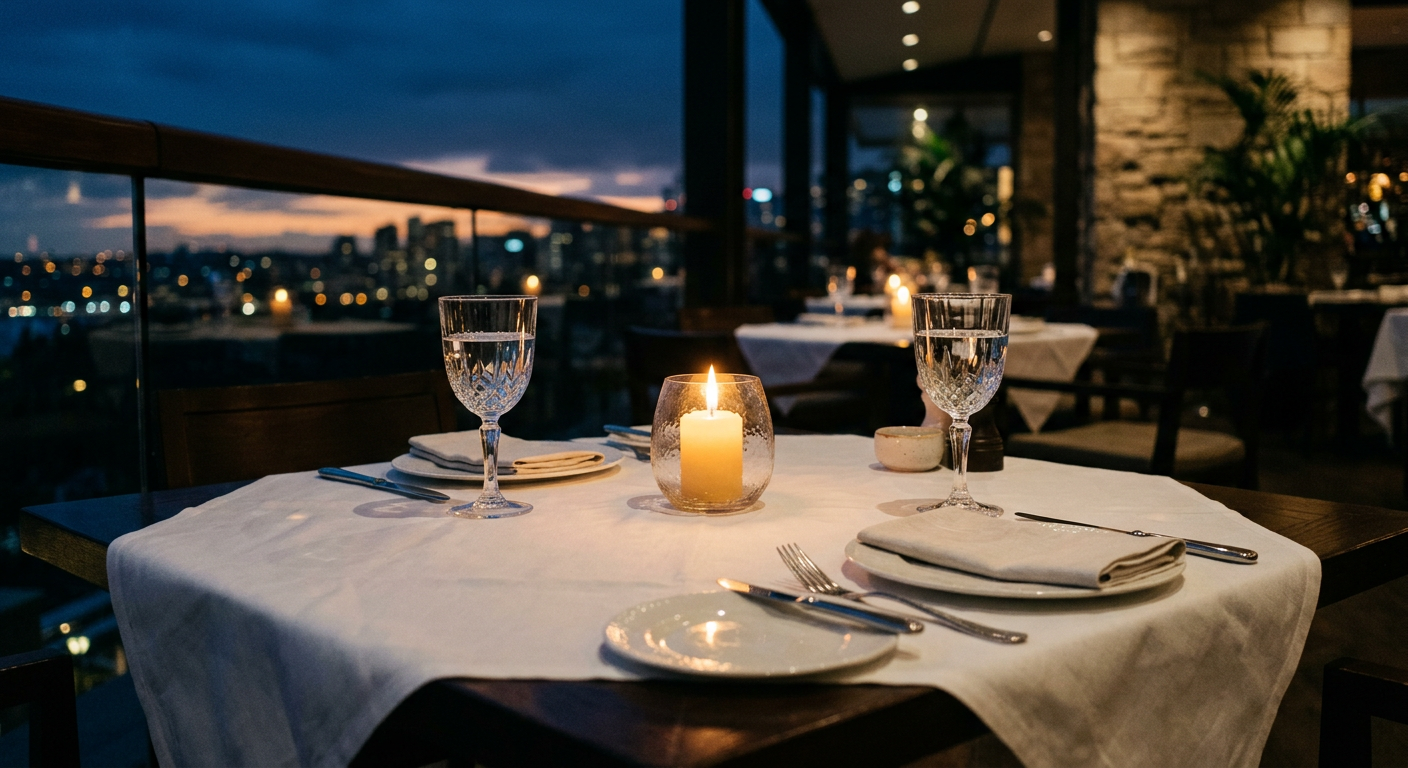
The dinner date is, in form, what its name suggests: an evening that begins at a restaurant. The format is shaped by the restaurant — its arrival window, its booking duration, its tempo. A dinner is typically four to six hours, ending either at the close of the restaurant or shortly after, with the conversation extending into a quieter setting if both parties choose.
The hotel date is shaped by privacy rather than venue. The meeting happens at the hotel suite of one or other party, on a schedule determined entirely by the two people involved. The format is more variable, more concentrated, and structured differently. It is not a shorter dinner. It is a different occasion.
The visitor who asks himself which of the two fits the brief is already ahead of most.
The Dinner Date: Duration, Venue, Dress
A dinner date runs typically from eight in the evening to midnight or one in the morning. The four-hour minimum is partly a function of the venue — a serious restaurant cannot be enjoyed in less — and partly of the rhythm. An aperitif, three courses, a longer conversation over the cheese or the dessert, a digestif. Each element has its own pace, and the pace itself is most of what the dinner is for.
The venue is the visitor’s responsibility. The companion does not choose the restaurant. The visitor reserves, in his own name, at a restaurant the companion is comfortable being seen at. The two are not always the same. The restaurants in Bangkok, Dubai, Istanbul and Moscow that work well for this format are well known to working companions; an experienced one will gently flag a restaurant that does not, before the booking is confirmed.
The dress code follows the venue. A Michelin-starred dining room in a five-star hotel — jacket, tailored trousers, dress shirt for the visitor; an evening dress and discreet jewellery for the companion. A high-end private club — slightly less formal, but never casual. The fastest way to misread the dinner format is to dress for the wrong restaurant.
The Hotel Date: Privacy, Pacing, Set-Up
The hotel date is a different geometry. The meeting happens in the suite — either the visitor’s, or, in some markets, the companion’s. The duration is more flexible: two hours, four, the full evening, the full night. The shorter formats exist; the longer ones are the ones that the discerning visitor more often books.
The set-up matters more than the duration. The suite should be ready: tidied, with refreshments arranged, lighting adjusted, the air conditioning at a temperature that is not arctic. A companion arriving at a hotel suite that is in disarray will form an impression of the visitor that is difficult to recover from in the first thirty minutes.
The pacing is the visitor’s to set, gently. The hotel date is not a sprint. The first half-hour is conversation — a glass of something, a brief settling into the room, an unhurried easing of the booking from “two strangers in a hotel” to “two people who chose to spend the evening this way”. The companions who work well at this end of the market are the ones who carry that transition naturally. The visitors who get the most from the format are the ones who allow them to.
This is not a piece about what happens later in the booking. That is not the public part of the conversation, and the discerning visitor understands that nothing here will list or describe it. What matters in print is the framing — the privacy, the pacing, the set-up — because those are the levers the visitor controls.
The Hybrid (Dinner-Then-Hotel) and Why It Costs More Than the Sum
The most commonly booked format at the upper end is in fact a third one — dinner at the restaurant followed by the rest of the evening at the suite. The two are arranged as a single booking, typically running from eight in the evening to one or two in the morning.
The hybrid is more than the sum of its parts for a simple reason. The dinner builds the room. The hours that follow benefit from that. Visitors who book the hotel date alone, without the dinner that precedes it, are paying for the duration but not for the architecture. The companions who work well in the hybrid format are the ones who understand that the dinner is preparation for the rest of the evening, not a separate event that happens to come first.
The pricing reflects the architecture. Hybrid bookings are typically priced at the longer-evening rate of the catalogue, with no separate dinner fee. The companion does not bill the dinner as one booking and the suite as another; both are folded into a single evening at a single rate. This is the convention at the better agencies. An agency that bills the dinner and the suite separately is, in most cases, not the agency to book the evening through.
Multi-Day Bookings: A Different Conversation Entirely
Beyond the single evening, multi-day bookings — three days, a week, a longer travel trip — are a separate format with their own logic. The pricing model changes; the verification step is more elaborate; the brief is closer to a private travel partnership than to a single booking.
The discerning visitor approaches a multi-day booking through a conversation with the agency well in advance — typically three to six weeks — rather than through the standard enquiry channel. The booking includes a planning step: hotels, restaurants, travel logistics, the small details that make a week-long trip feel like a trip rather than a series of bookings strung together. The curated companion catalogue maintained for the upper end of the market handles multi-day formats through a different process from the single evening — visitors who anticipate the format should ask the agency to outline the conversation before committing.
Choosing the Right Format for the Trip
A working summary, by intent:
Choose the dinner date when the evening is partly social — a restaurant the visitor has wanted to try, a city he is unfamiliar with, an occasion that benefits from the architecture of a serious meal. The dinner date is the right format when the venue is part of the brief.
Choose the hotel date when the trip is built around privacy rather than venue — when the visitor is in town for a short window and wants the evening to be entirely his own, without the choreography of a restaurant. The hotel date is the right format when the suite is what the evening is for.
Choose the hybrid when the evening has time for both — when the dinner builds the room and the rest of the night benefits from it. This is the most commonly booked format at the upper end, and the format that returns the best evenings to the visitors who book it.
Choose the multi-day booking when the trip is longer, when the brief is more like a private travel partnership than a single meeting, and when the visitor’s week has space for the slow rhythm of a several-day acquaintance. This is the format that the most experienced visitors come back to most often.
A useful second opinion on the broader etiquette of the format is available through Monocle’s travel coverage and the long-form writing at Robb Report, both of which have covered adjacent territory with the right tone.
Editorial Team, Asia-Escort
- Internal links used:
https://asia-escort.net/,https://asia-escort.net/country/bangkok/,https://asia-escort.net/country/uae/ - External links used: Monocle, Robb Report
